

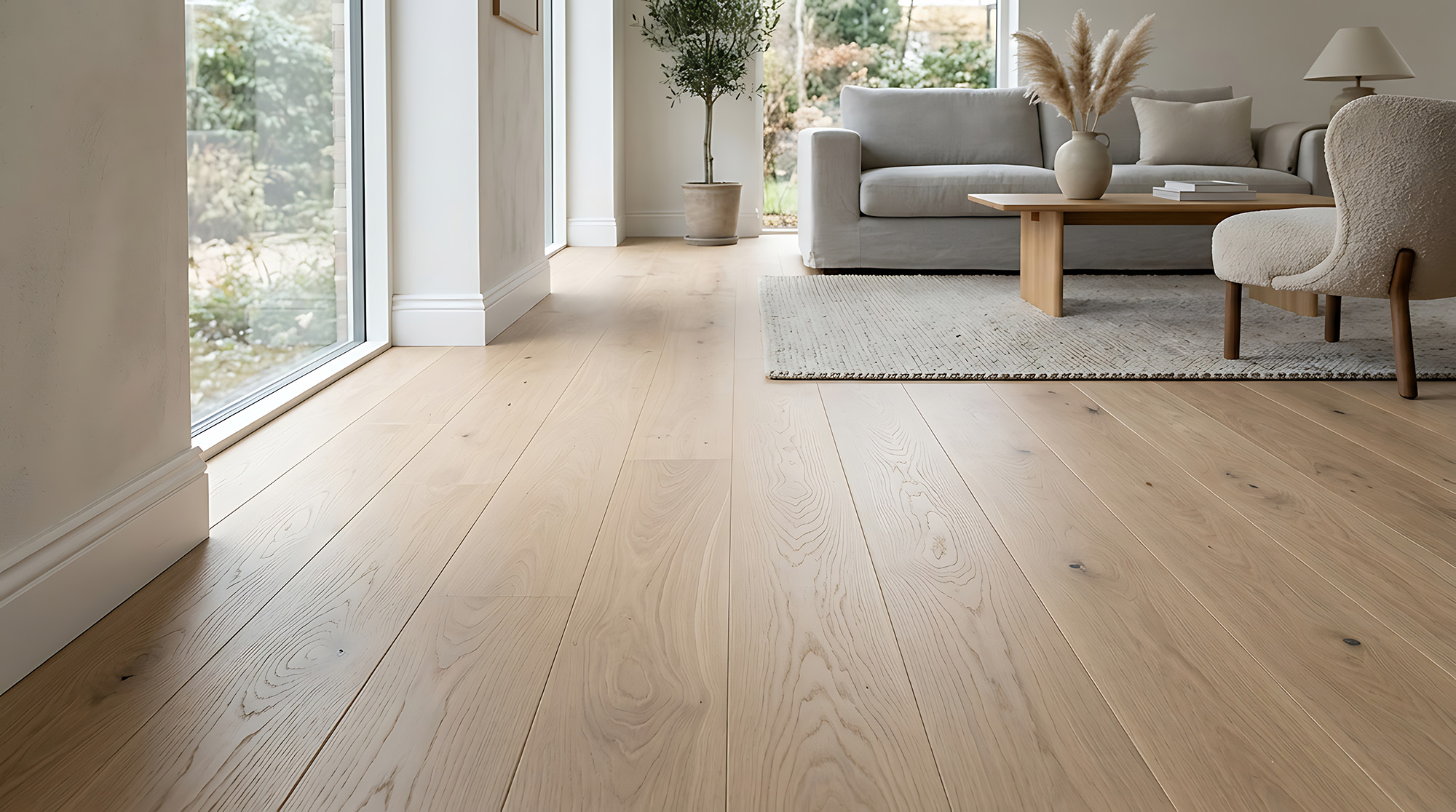
When you shop for engineered hardwood flooring, you probably focus on species, board width, stain color, and finish. However, one of the most critical factors determining the authentic beauty, texture, and long-term performance of your floor is how the top layer of real wood was cut from the tree.
Engineered hardwood consists of a durable, multi-ply backing topped with a genuine hardwood wear layer known as a veneer or lamella. Manufacturers harvest that top veneer using three primary milling techniques: dry sawn, sliced, and rotary-peeled. Each method produces a completely distinct grain pattern, visual texture, and dimensional feel.
Understanding how these cuts differ helps you select the perfect surface for your home. Whether you are updating a family living room in Broken Arrow, OK, renovating an open-concept kitchen in South Tulsa, or designing a custom build in Tulsa or Bixby, here is everything you need to know about how veneer cuts define your engineered hardwood.
Understanding the Wear Layer: Why the Veneer Cut Matters
To appreciate the differences between veneer cuts, you first need to look at how engineered wood is constructed. Unlike solid hardwood, which is milled from a single timber board, engineered hardwood bonds a real hardwood veneer to a stable core of cross-laminated plywood or high-density fiberboard.
What Is an Engineered Hardwood Veneer?
The veneer is the only part of the plank you see and walk on once installation is complete. It delivers the genuine grain, rich coloration, and natural knots of oak, hickory, maple, or walnut.
The cutting method changes the angle at which the blade meets the growth rings of the log. Because of this geometry, the same species of white oak can look completely traditional and elegant, softly contemporary, or wildly dramatic simply based on how the mill cuts the veneer.
Dry Sawn Veneer: The Timeless, Solid Hardwood Aesthetic
If you love the authentic look and feel of traditional solid hardwood planks, dry sawn engineered flooring is your premier choice.
How Sawn Veneers Are Crafted
In the dry sawn process, the mill cuts the log using a traditional saw blade, just like standard solid lumber. The wood is dried slowly to maintain its natural cell structure and moisture balance before being sawn into planks. Because this method uses a saw blade, it creates a small amount of sawdust, but it preserves the organic integrity of the wood fibers without boiling or soaking the timber.
Sawn veneers are typically the thickest wear layers available, commonly measuring between 3 millimeters and 6 millimeters.
Visual Appeal and Natural Grain
Sawn veneer displays the classic cathedral grain patterns, straight linear graining, and delicate medullary rays that homeowners associate with solid architectural flooring. When you walk across a sawn veneer floor, the texture feels substantial and authentic underfoot.
Because the wood cell walls remain intact during the sawing process, the surface accepts stains deeply and evenly. You can wire-brush, hand-scrape, or smoke sawn planks to achieve breathtaking artisanal finishes. Furthermore, thicker sawn wear layers can often be sanded down and refinished in future years, giving you decades of lasting value.
Sliced Veneer: Clean Grain Patterns and Refined Value
Sliced veneer, often referred to as flat-sliced or plain-sliced, provides a refined, elegant appearance while optimizing yield from the hardwood log.
The Slicing Process and Grain Definition
To produce a sliced veneer, the log is steamed or soaked in hot water to soften the wood fibers. A heavy industrial knife then slices through the log lengthwise, peeling thin sheets of wood.
Because the knife cuts across the log in flat passes, sliced veneer captures natural grain movements and soft cathedral arches that closely resemble traditional sawn lumber. Wear layers on sliced engineered hardwood typically range from 1.2 millimeters to 3 millimeters thick.
Where Sliced Hardwood Excels
Sliced engineered hardwood is an exceptional option if you want genuine architectural graining at an accessible price point. The wood retains a natural look without the intense grain distortion seen in rotary cuts.
Because the steaming process softens the fibers, sliced veneers take pigmented stains cleanly and offer smooth, consistent surfaces. This clean, linear grain profile pairs beautifully with modern, transitional, and Scandinavian design aesthetics where subtle, understated wood grain complements open floor plans.
Rotary-Peeled Veneer: Bold, Dramatic Patterns for Active Spaces
Rotary-peeled engineered hardwood offers a completely distinct aesthetic characterized by bold, swirling grain movement.
The Peeling Method Explained
To manufacture rotary-peeled veneer, the mill boils or conditions the log in hot water and mounts it on a high-speed industrial lathe. The log spins against a continuous blade, much like unrolling a giant roll of paper towels.
This continuous peeling technique utilizes nearly the entire log, generating virtually zero sawdust. It represents the most yield-efficient production method in the flooring industry.
Aesthetic Differences and Texture Considerations
Because the blade follows the concentric growth rings around the circumference of the log, rotary peeling produces broad, sweeping, wavy grain patterns that repeat across the board. You will notice large swirls and dramatic arches rather than the straight, tight grain lines of sawn lumber.
Rotary veneers provide an expressive, rustic look that many homeowners appreciate in casual spaces, dens, or playrooms. However, the boiling and continuous tension of the lathe can create microscopic stress fractures, known as lathe checks, on the underside of the veneer. Premium manufacturers use advanced adhesives and stabilizers to secure these layers, but rotary cuts generally feature thinner wear layers that cannot be sanded or refinished in the future.
Comparing Veneer Cuts for Oklahoma Homes
Selecting the right veneer cut is not just about looks. It also involves matching your flooring to your household lifestyle and the local climate.
Handling Seasonal Humidity and Temperature Swings
Oklahoma weather brings hot, humid summers and dry winter heating seasons. These fluctuations cause natural wood to expand and contract. Engineered hardwood provides superior dimensional stability on concrete slabs, but your veneer cut still plays a role in environmental resilience.
Dry sawn veneers handle indoor relative humidity shifts with exceptional grace because their cell walls have not been expanded or softened by boiling water. For homes in Broken Arrow, OK, Tulsa, South Tulsa, and Bixby, sawn engineered hardwood offers an ideal defense against seasonal cupping when paired with proper indoor climate control. If you are outfitting a vacation retreat near Grand Lake in Grove, Afton, or Vinita, high-quality sawn or sliced veneers over a robust multi-ply core provide excellent durability against seasonal lake humidity.
Matching the Cut to Your Family's Lifestyle
Consider how busy your household is every day. Choose dry sawn if you want the highest investment value, deepest color clarity, the ability to refinish your floors years down the road, and an indistinguishable match to solid hardwood. Choose sliced if you prefer a crisp, sophisticated grain pattern with authentic cathedral peaks that balances high-end design with cost-effective engineering. Choose rotary-peeled if you love wide, dramatic grain patterns, rustic character, and budget-friendly pricing for secondary rooms or starter renovations.
Transform Your Living Space with BA Flooring & Design LLC
Choosing the right engineered hardwood veneer cut comes down to how you want your home to look and feel every day. When you want to see the difference between sawn, sliced, and rotary-peeled grain patterns in person under natural lighting, our team is here to guide you through every sample. Whether your home is in Broken Arrow, OK, Tulsa, South Tulsa, or Bixby, stop by our showroom or reach out to us today to schedule your free in-home estimate.


