

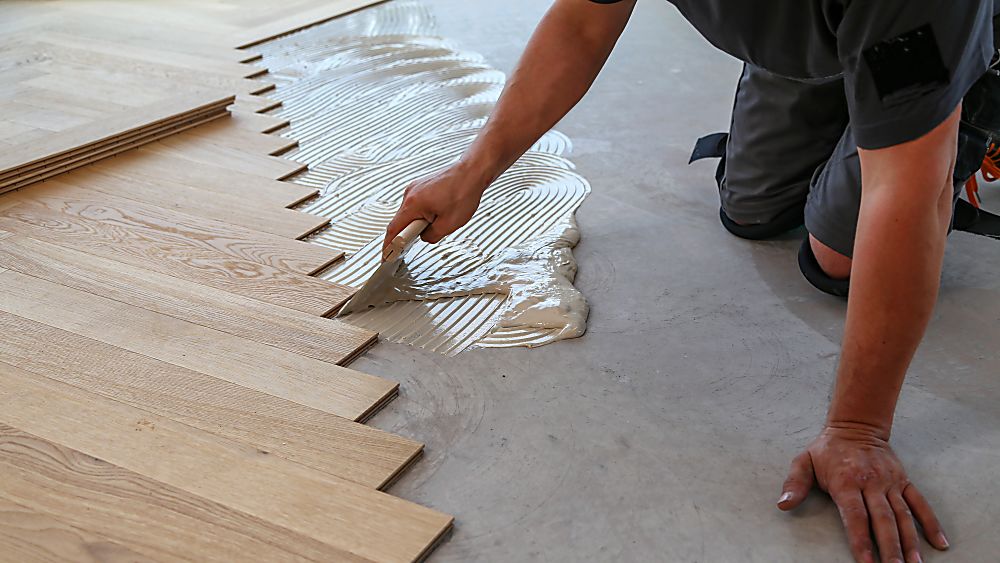
Can you install genuine hardwood flooring over a concrete slab foundation?
Yes, you can install engineered hardwood directly over a concrete slab safely and successfully. Engineered hardwood gives you the authentic look, rich warmth, and natural grain of real wood while providing the structural stability needed for ground-level concrete foundations.
In Broken Arrow, OK and across the greater Tulsa metro, most homes are built on poured concrete slab-on-grade foundations. Pairing a concrete slab with Oklahoma weather swings, high summer humidity, and heavy red dirt traffic means you must select the right flooring materials and installation techniques.
Here is our complete guide from BA Flooring & Design LLC on why engineered wood excels on concrete, how our team prepares your slab for lasting performance, and which installation method is right for your home.
Can You Install Engineered Hardwood Directly Over Concrete Slabs?
Yes, engineered hardwood is specifically designed for installation over concrete slabs. While traditional solid hardwood expands and contracts dramatically when exposed to concrete moisture, engineered wood features a layered core that resists expansion, contraction, and warping.
Each engineered plank is constructed with multiple cross-ply layers of high-density plywood, composite core, or hardwood beneath a genuine hardwood surface veneer. These layers run in alternating directions. When moisture vapor rises through your concrete slab or when indoor humidity fluctuates, the opposing layers hold the plank flat.
Whether you are updating your living spaces in Broken Arrow, OK, remodeling a master bedroom suite in South Tulsa, or building a custom home in Tulsa or Bixby, engineered hardwood gives you real wood floors without the risk of cupping or buckling.
Why Engineered Hardwood Outperforms Solid Wood on Oklahoma Slabs
Oklahoma weather presents unique challenges for your home interior surfaces. Between hot summers, freezing winter storms, and seasonal humidity changes, your foundation constantly interacts with your flooring.
Structural Stability Against Subfloor Moisture
Concrete is a porous material. Even if your slab looks and feels dry on the surface, moisture vapor continuously rises from the ground beneath your home.
Solid hardwood boards expand across their grain width when exposed to this moisture vapor, causing edges to cup, planks to crown, or entire sections of your floor to buckle. Engineered hardwood planks counteract this pressure through their cross-grain construction. The core layers lock the wood in place, ensuring your floors stay flat and tight through every season.
Year-Round Performance in Green Country Climates
Indoor humidity levels fluctuate significantly across Northeast Oklahoma. During our humid summer months, indoor air holds moisture. In the dry winter months, your central heating dries out the air.
Engineered hardwood accommodates these humidity swings without developing wide seasonal gaps, creaks, or board separation. If you own a vacation home near Grand Lake in Grove, Afton, or Vinita, where lake humidity stays high throughout the summer, engineered hardwood provides that same dependable dimensional stability.
Everyday Durability for Oklahoma Red Dirt and Pets
Between Oklahoma red clay tracked in from the backyard, active dogs, and busy family routines, your floors need tough surface protection. Premium engineered hardwood features durable factory-applied aluminum oxide or UV-cured urethane finishes. These wear layers resist micro-scratches from grit and claws, making daily cleaning and maintenance straightforward.
Essential Concrete Slab Preparation Before Wood Floor Installation
Subfloor preparation accounts for up to 90 percent of your floor's long-term performance. If you install wood over an unprepared concrete foundation, you risk hollow sounds, loose boards, and adhesive failure. Our installation specialists follow strict preparation standards on every project.
Professional Concrete Moisture Testing
Before installing any flooring, our team measures the moisture emission rate and relative humidity of your concrete slab. We use calibrated moisture meters and in-situ relative humidity probes to check that your slab meets manufacturer warranty standards. If your slab shows elevated moisture emissions, we apply a specialized liquid moisture barrier or an underlayment membrane to stop vapor from reaching your wood planks.
Concrete Flattening, Grinding, and Leveling
A flat subfloor is non-negotiable for engineered wood. Concrete slabs in Broken Arrow and Tulsa homes frequently settle over time, leaving dips, ridges, and high spots.
Our team inspects your slab using precision straightedges. We grind down high ridges and fill low spots using high-strength, self-leveling cement compounds. We bring your subfloor within the industry tolerance of no more than 3/16 inch variation across a 10-foot radius. This careful leveling eliminates bounce, clicks, and hollow pockets underfoot.
Slab Decontamination and Cleaning
Adhesives and underlayments require a clean, sound surface. We scrape away drywall mud, paint drips, old carpet glue, and debris, followed by deep vacuuming. This creates a clean foundation for direct adhesive bonding or underlayment placement.
Glue-Down vs. Floating Engineered Hardwood on Concrete Slabs
When installing engineered hardwood over concrete, you have two primary methods to choose from. Both methods deliver exceptional results when installed with care.
The Direct Glue-Down Method
In a direct glue-down installation, our team applies a specialized elastomeric adhesive across your prepared concrete slab and sets each plank directly into the adhesive bed.
Solid Underfoot Acoustic Feel: Glue-down installations feel firm and solid underfoot, matching the feel of traditional nail-down hardwood floors.
Integrated Sound and Moisture Protection: Many modern adhesives contain built-in moisture vapor suppressants and acoustic dampeners, providing an all-in-one protective barrier.
Best For: Large open-concept layouts, wide plank profiles, and custom home construction in Tulsa and Bixby where a permanent, immovable feel is desired.
The Floating Floor Method
In a floating floor installation, your engineered wood planks click together or glue tongue-to-groove over a specialized underlayment pad, without being fastened or glued to the concrete slab.
Fast and Clean Installation: Because wet adhesives are not applied to your concrete slab, floating installations move rapidly with minimal mess.
Thermal Cushioning: The underlayment pad adds a layer of thermal insulation between the cold concrete foundation and your finished floor, while easing joint fatigue.
Best For: Faster residential remodels, condominiums, and rooms where you want quick turnaround times.
Our Professional Step-by-Step Installation Process
When you choose BA Flooring & Design LLC, our team handles every stage of your project with care:
1. In-Home Consultation and Precision Measuring: We visit your home to inspect your concrete slab, check doorways and baseboards, and take detailed measurements.
2. On-Site Acclimation: We deliver your engineered hardwood to your home prior to installation so the wood adjusts to your living space's normal temperature and humidity levels.
3. Subfloor Grinding and Leveling: We prepare your concrete slab to meet strict industry flatness standards.
4. Moisture Barrier Application: We install the appropriate liquid vapor barrier or underlayment pad tailored to your slab's moisture readings.
5. Plank Layout and Installation: We stagger plank end joints, blend grain patterns and color tones from multiple boxes, and preserve required expansion gaps around all perimeter walls.
6. Transitions, Trim, and Clean Finish: We install coordinating transitions, reinstall your baseboards or shoe molding, clean the room completely, and conduct a final walkthrough with you.
Engineered hardwood brings timeless beauty, warmth, and elevated value to your home. Whether your home is in Broken Arrow, Tulsa, South Tulsa, or Bixby, stop by our Broken Arrow showroom or give our team a call to schedule your free in-home estimate.
Frequently Asked Questions About Installing Engineered Hardwood Over Concrete
Can you install engineered hardwood in every room over concrete?
You can install engineered hardwood across living rooms, dining rooms, bedrooms, hallways, home offices, and kitchens over concrete slabs. For full bathrooms, laundry rooms, or entry mudrooms where standing water is common, we recommend pairing your hardwood with waterproof luxury vinyl or porcelain tile.
How long should engineered hardwood acclimate in your home?
Engineered hardwood typically requires 48 to 72 hours of acclimation inside your temperature-controlled home. Your heating or air conditioning should run at normal everyday temperatures between 65 and 75 degrees Fahrenheit with indoor relative humidity between 35 and 55 percent.
Will engineered hardwood make your floors feel cold over concrete?
Wood is a natural insulator that stays warmer to the touch than tile, stone, or bare concrete. When paired with an insulating underlayment or high-grade adhesive, your engineered hardwood floors remain comfortable and warm through Oklahoma winter days.


