

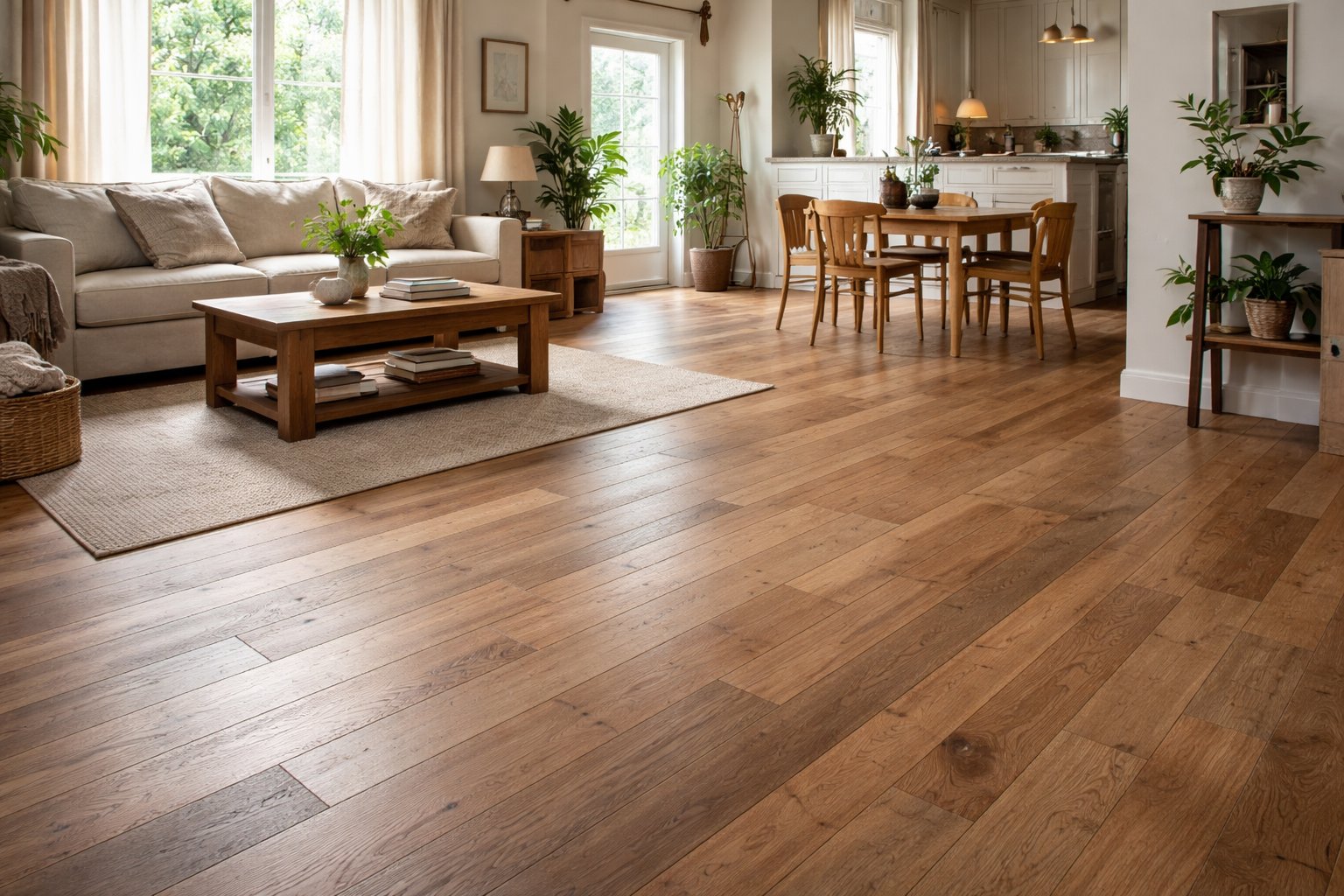
Homes built on concrete slabs are extremely common in Broken Arrow. Slab foundations offer durability and cost efficiency, but they also influence which flooring materials perform best over time. When it comes to hardwood, the choice often comes down to engineered hardwood or solid hardwood. Both bring natural beauty and long-term value, yet they behave very differently when installed over concrete. Understanding those differences upfront helps avoid moisture problems, movement issues, and costly repairs later.
Why slab foundations change the hardwood conversation
Concrete slabs naturally hold and transfer moisture. Even when a slab looks dry, moisture vapor can still move upward through the concrete. Seasonal humidity swings in Oklahoma add another layer of stress, causing materials to expand and contract throughout the year. Because hardwood reacts to moisture more than many other flooring types, slab conditions make material selection especially important.
Engineered hardwood and how it handles slab conditions
Engineered hardwood is built with multiple layers. A real hardwood veneer sits on top, while the core is made of cross-layered plywood or high-density fiberboard. This layered structure gives engineered hardwood greater dimensional stability, which is a major advantage over concrete slabs.
Because engineered planks resist expansion and contraction more effectively, they perform well in slab homes where moisture control is critical. With proper moisture testing, vapor barriers, and adhesives, engineered hardwood can be installed directly over concrete without sacrificing long-term performance. Many homeowners exploring hardwood flooring options appreciate that engineered hardwood offers the warmth and character of wood while reducing the risks associated with slab foundations. For a quick overview of wood benefits and considerations, this hardwood flooring information page is a helpful reference point.
Solid hardwood and the challenges it faces on concrete
Solid hardwood is milled from a single piece of wood, which gives it a classic feel and the ability to be sanded and refinished multiple times. However, that same solid construction makes it more sensitive to moisture and humidity changes.
Installing solid hardwood directly over concrete is rarely advisable. The slab’s moisture can cause cupping, crowning, or gapping over time. In slab homes, solid hardwood typically requires a raised subfloor system or sleeper system, which adds cost, height, and complexity to the installation. While solid hardwood remains a beautiful and timeless choice, it often works best in homes with crawl spaces or basements rather than slab foundations.
Installation methods that make or break performance
Installation technique matters just as much as material choice. Engineered hardwood allows for more flexibility, including glue-down installations directly over properly prepared concrete. This method keeps floor height low and helps maintain smooth transitions between rooms.
Solid hardwood installations over slabs usually involve nail-down methods over a plywood subfloor. That additional structure can improve performance, but it also increases labor time and project scope. For many slab homeowners, the simpler installation process of engineered hardwood is a major advantage when balancing budget, timeline, and long-term reliability.
Moisture testing and prep are non-negotiable
Regardless of the hardwood type, slab homes require thorough moisture testing before installation begins. Calcium chloride tests or relative humidity probes help determine whether moisture levels fall within manufacturer guidelines. Skipping this step is one of the most common causes of hardwood failures on concrete.
Engineered hardwood offers more forgiveness if conditions fluctuate slightly, while solid hardwood demands tighter moisture control. Proper vapor barriers, adhesives, and acclimation procedures all play a role in protecting the investment and ensuring floors perform as expected for years to come.
Style, plank width, and modern design preferences
From a design standpoint, both engineered and solid hardwood offer a wide range of finishes, species, and plank sizes. However, wider planks—popular in many Broken Arrow homes—tend to perform better in engineered formats due to improved stability. This makes engineered hardwood especially appealing for open-concept layouts and modern interior styles.
Homeowners considering traditional hardwood flooring aesthetics can still achieve that look with engineered products while gaining added peace of mind over a slab foundation. Browsing flooring products can help narrow down visuals first, then fine-tune construction details based on slab conditions.
Long-term value and maintenance expectations
Solid hardwood can often be refinished more times over its lifespan, which appeals to homeowners planning decades ahead. Engineered hardwood, depending on veneer thickness, may allow one or two refinishes. That said, today’s engineered products are designed for long-term durability and often last just as long in real-world slab installations because they avoid moisture-related damage.
Maintenance routines are similar for both options: consistent humidity control, proper cleaning, and protective pads under furniture all contribute to longevity.
Choosing the right hardwood for slab homes in Broken Arrow
For most slab homes in Broken Arrow, engineered hardwood offers a more practical balance of beauty, stability, and installation flexibility. Solid hardwood can still be an option with additional prep and investment, but it requires careful planning and ongoing moisture management.
Selecting the right material starts with understanding the foundation, moisture conditions, and lifestyle needs of the home. With professional guidance, hardwood flooring can absolutely thrive on slab foundations when the right choices are made from the start.
Ready to plan hardwood flooring for a slab home?
Our flooring experts help homeowners across Broken Arrow select hardwood options that perform beautifully over concrete slabs. To schedule a consultation or discuss engineered and solid hardwood choices, contact our team and start planning with confidence.


